
Global Warming Initiative
Plantations International sets out the science of global warming, its effects on people and ecosystems, and the solutions available to stabilise greenhouse gas levels.
Causes of global warming
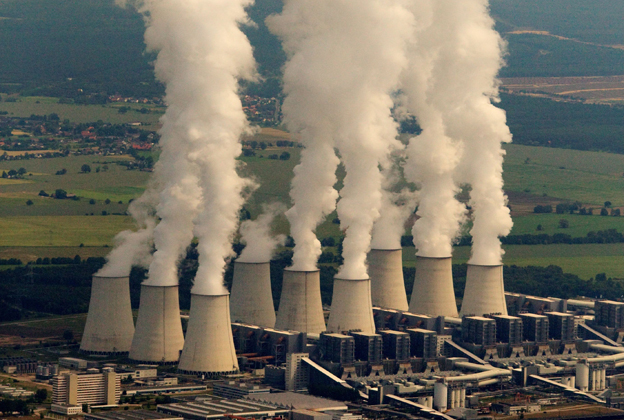
Scientists spent decades identifying the causes of warming. Natural cycles and events alone cannot explain the measured amount and pattern of warming; only the inclusion of human-produced greenhouse gases (GHGs) does. The UN created the IPCC, which reviews findings every few years, and its reports reflect the consensus of hundreds of scientists.
Humans emit several GHGs, mainly from burning fossil fuels in vehicles, factories and power plants. CO2 causes the most warming. Other sources include methane from landfills and agriculture (especially the digestion of grazing animals), nitrous oxide from fertilisers, refrigeration and industrial gases, and deforestation, which reduces CO2 storage.
Gases differ in heat-trapping strength. Methane traps over 20 times the heat of CO2 per molecule, and nitrous oxide about 300 times. CFCs, banned in much of the world for also damaging the ozone layer, trap thousands of times more. Because CO2 is far more concentrated, it adds the most warmth overall.
Scientists express all GHGs as CO2 equivalents. Since 1990, yearly emissions have risen by about 6 billion metric tons CO2-equivalent, an increase of over 20%.
Effects of global warming
Warming is occurring worldwide. The globe is up more than 1°F (0.8°C), with larger increases in polar regions, and the effects are happening now: melting glaciers and sea ice, shifting rainfall and animals relocating.
Ice is melting worldwide, especially at the poles, including mountain glaciers, the West Antarctic and Greenland ice sheets, and Arctic sea ice. Researcher Bill Fraser tracked Adélie penguins in Antarctica, whose breeding pairs fell from 32,000 to 11,000 over 30 years. Sea level rise has accelerated over the last century. Some butterflies, foxes and alpine plants have moved north or to cooler, higher areas, and average global precipitation has increased. Spruce bark beetles boomed in Alaska after 20 years of warm summers and have damaged 4 million acres of spruce.
- By the end of the century, sea levels are projected to rise 7 to 23 inches (18 to 59 cm), with continued polar melting adding 4 to 8 inches (10 to 20 cm).
- Hurricanes and storms are likely to strengthen, and floods and droughts will become more common.
- Interdependent species may fall out of sync, such as plants blooming before pollinators are active.
- Ethiopia's rainfall could fall 10% over 50 years, and less fresh water will be available. If Peru's Quelccaya ice cap keeps melting at its current rate, it will be gone by 2100, leaving thousands who depend on it for drinking water and electricity without either.
- Some diseases will spread, such as mosquito-borne malaria.
- Ecosystems will shift. Some species will move north or thrive, while others that cannot move may go extinct. Wildlife scientist Martyn Obbard found that since the mid-1980s polar bears have become considerably thinner due to less sea ice for hunting. Biologist Ian Stirling found a similar trend in Hudson Bay and fears polar bears could disappear if sea ice does.
The planet is heating up fast
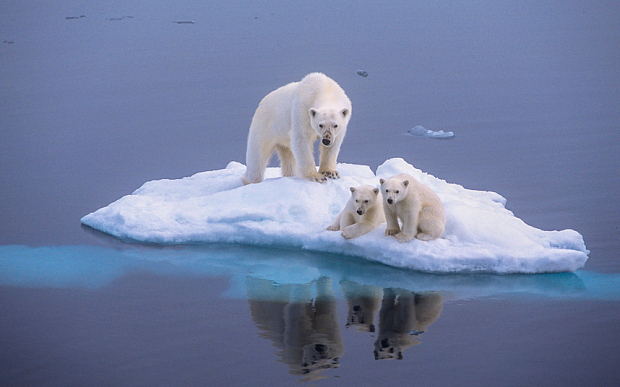
Glaciers are melting, seas are rising, cloud forests are drying and wildlife is struggling to adapt. Humans have caused most of the last century's warming by releasing heat-trapping gases, and current GHG levels are higher than at any point in the last 650,000 years.
Climate change varies by location, as heat moves with the planet's rotation, carrying moisture over oceans and shifting the weather patterns that living things depend on. The question now is how to slow warming and adapt to the changes already underway.
Greenhouse effect
Greenhouse gases let sunlight reach the Earth's surface but trap some of the heat that the surface radiates back, much like the glass of a greenhouse.
Joseph Fourier calculated in 1824 that the Earth would be much colder without an atmosphere. The natural greenhouse effect keeps the planet livable, about 60°F warmer than it would otherwise be. In 1895, Svante Arrhenius found that humans could strengthen this effect by producing CO2, which launched a century of climate research.
GHG levels rose and fell over Earth's history but stayed fairly steady for the past few thousand years, as did temperatures until recently. Burning fossil fuels and other emissions are now intensifying the effect.
The term "climate change" is used alongside "global warming" because rising average temperatures move heat through winds and ocean currents, cooling some areas, warming others and altering rain and snowfall unevenly.
Temperature change anomalies
Over hundreds of thousands of years, temperatures and CO2 have cycled as the Earth's orbital position relative to the sun changed, producing ice ages.
For thousands of years, natural GHG absorption has balanced emissions, keeping concentrations and temperatures stable, which allowed human civilisation to develop.
Volcanic eruptions briefly cool the surface for only a few years, and El Niño is a short, predictable cycle. Humans, by contrast, have increased atmospheric CO2 by more than a third since the Industrial Revolution. Changes of this scale once took thousands of years but now occur over decades.
Plantations International is concerned
Rapid GHG increases are changing the climate faster than some species can adapt, and the new, less predictable climate poses challenges for all life.
Past ice ages, which covered much of North America and Europe with ice, were only about 5°C (9°F) colder than today's average, and those shifts took hundreds of thousands of years.
Rising GHGs are now melting the Earth's remaining ice sheets, including Greenland and Antarctica, which could significantly raise sea levels. Expected impacts include more intense storms, heavier rain followed by longer, drier droughts that hurt crops, shifting habitat ranges and loss of glacier-fed water supplies.
The IPCC reports that 11 of the 12 hottest years on record occurred between 1995 and 2006. Plantations International notes that some changes are occurring faster than expected.
Plantations International global warming solutions
The evidence that humans cause warming is strong, but responses remain debated. Economics, sociology and politics all shape planning.
Even if emissions stopped today, the Earth would warm by about another 1°F. Depending on choices made now, warming could eventually range from 2.5°F to 10°F.
A commonly cited target is stabilising GHGs at 450 to 550 ppm, about twice pre-industrial levels, which many believe would avoid the most damaging impacts. Current concentrations are about 380 ppm. The IPCC says emissions must fall 50% to 80% below their projected next-century path to reach this target. Many governments and individuals are working to cut emissions, and everyone can contribute.
Plantations International proposes "stabilisation wedges": seven approaches using technologies available within decades, which together could hold emissions near current levels for 50 years and support stabilisation near 500 ppm. Some options have drawbacks, and communities will make different energy choices.
To discuss how Plantations International can help, call +852 5808 3775 or contact a regional representative through the contact details page.
- Energy efficiency and better vehicle fuel economy
- Wind and solar power
- Hydrogen from renewables
- Biofuels
- Natural gas and nuclear power
- Carbon capture and underground storage (carbon sequestration)
- Removing CO2 from the air, for example by growing forests and changing farming practices to increase natural carbon storage
Related links
Farmers Are The Backbone of Society
Talk to our plantation team about developing, managing or owning a sustainable farm or orchard.